

The Peoria Project
The Peoria Project is a values-based segmentation model that groups registered voters into nine distinct audiences based on shared beliefs about the economy, institutions, social trust, and the future of the country. Rather than relying on demographic categories alone, it captures how individuals interpret political and social issues, providing a more precise understanding of how different audiences think and make decisions.
Each individual is assigned both a primary cluster and probability scores across all nine clusters, with clusters integrated into Catalist’s data infrastructure to support analysis, messaging development, and targeted outreach across channels.

How Clients Use The Peoria Project
Clients use The Peoria Project to understand how values are distributed across electorates and to develop more effective communication strategies grounded in those insights.
Common applications include:
- Analyzing audience composition within a district, membership list, or target universe
- Identifying key and persuadable audiences based on shared values and attitudes
- Tailoring messaging to resonate with specific clusters
- Segmenting outreach programs across digital, field, and other channels
- Prioritizing resources toward audiences most likely to respond
Largest Cluster by Congressional District
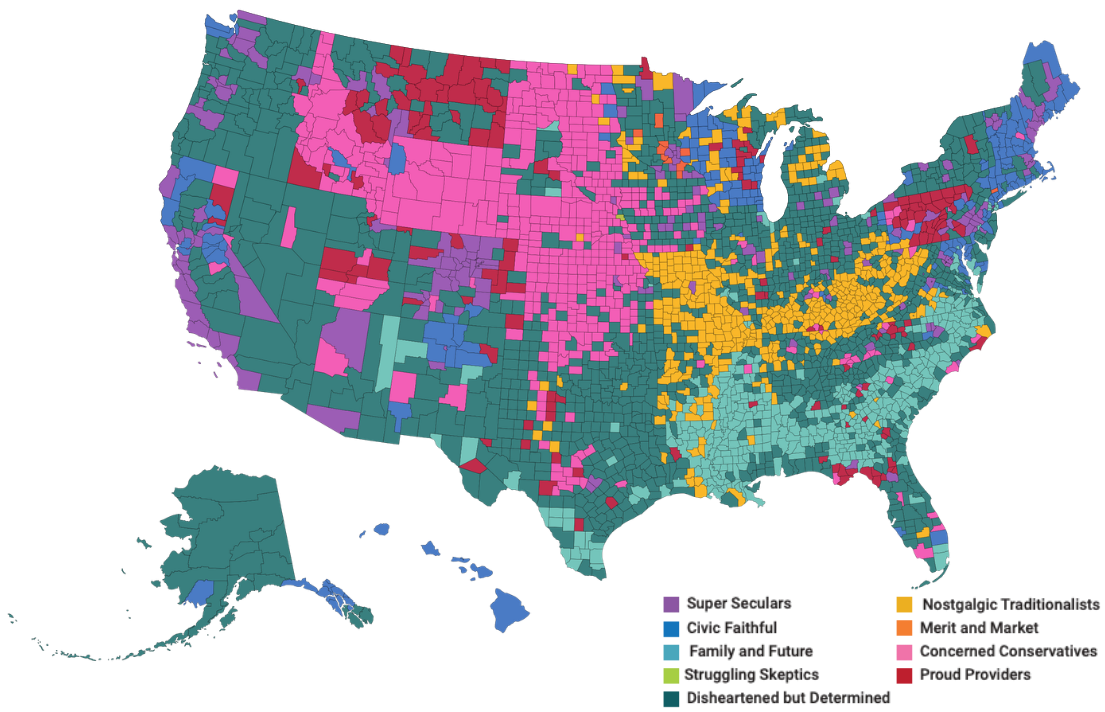
The Nine Values Clusters
The Peoria Project groups voters into nine distinct audiences, each defined by a shared set of values, beliefs, and attitudes.
Super Seculars
Progressive and open to cultures and religions different from their own, with strongly anti-authoritarian views and high social trust. They prioritize issues like climate change, healthcare, and democracy, and are especially motivated by values-driven messaging around equity and inclusion.
Civic Faithful
Characterized by high levels of social trust and strong engagement with community institutions, including unions and membership organizations. They tend to prioritize issues like democracy, healthcare, and climate change, and respond to messaging grounded in collective action and institutional stability.
Family and Future
Optimistic about human nature and the ability to build a better future, but skeptical that institutions will meet their needs. They tend to balance hope and uncertainty, responding to messaging that emphasizes opportunity, stability, and long-term investment in communities.
Struggling Skeptics
Economically sensitive and deeply skeptical of institutions, including political parties and large systems of power. They prioritize economic concerns and respond to messaging that acknowledges financial insecurity and emphasizes fairness, stability, and tangible results.
Disheartened but Determined
Pessimistic about their economic future but resilient and determined to persevere, with a strong sense of individual responsibility and skepticism toward politics. They respond to messaging that acknowledges economic strain while emphasizing practical support and pathways to stability.
Nostalgic Traditionalists
Rooted in traditional views of family, religion, and social order, and concerned about cultural and societal change. They respond to messaging that emphasizes stability, respect for tradition, and preserving established institutions.
Merit and Market
Free-market oriented and driven by a belief in competition and individual success, with a focus on economic growth and personal responsibility. While fiscally conservative, they are less consistently aligned on cultural issues and respond to messaging that emphasizes opportunity, innovation, and economic mobility.
Concerned Conservatives
Focused on protecting the traditional family and social norms, with strong concerns about cultural change, immigration, and education. They respond to messaging that emphasizes security, stability, and preserving core social values.
Proud Providers
Strongly oriented around traditional roles, personal responsibility, and providing for family, with a firm belief in capitalism and established social norms. They respond to messaging that emphasizes self-reliance, economic security, and respect for traditional roles and values.
How The Peoria Project Was Developed
The Peoria Project is grounded in large-scale survey research and extensive historical polling data, including insights from The Omnibus Project (TOP). The model was originally developed to better understand how values shape political behavior and has been continuously refined to reflect changes in the electorate.
Catalist expanded the model in advance of the 2020 cycle to incorporate additional measures of social trust, religious tolerance, and personal efficacy, further strengthening its ability to capture how individuals interpret political and social issues. The model was revalidated in 2026 using updated survey data, confirming that the clusters continue to accurately reflect the modern electorate.